
Peptide Knowledge Base
Understanding Peptide Bonds
A peptide bond is a covalent amide linkage formed between the carboxyl group of one amino acid and the amino group of another, releasing a water molecule (dehydration synthesis). This bond is planar and rigid due to resonance stabilization, giving partial double-bond character. Peptide bonds are the foundational bridges that link amino acids into chains — dipeptides, oligopeptides, and polypeptides — ultimately forming functional proteins. The sequence and configuration of these bonds dictate the primary structure of a peptide, influencing folding, stability, and biological activity. In research, understanding peptide bond geometry is crucial for designing stable analogs and predicting secondary structures such as alpha helices and beta sheets.
- Planarity: The C-N bond cannot rotate freely, restricting conformational flexibility.
- Trans configuration: Almost all peptide bonds exist in the trans form to minimize steric hindrance.
- Hydrolysis: Peptide bonds can be cleaved by enzymes (proteases) or harsh acid/base conditions.
Peptide Solubility
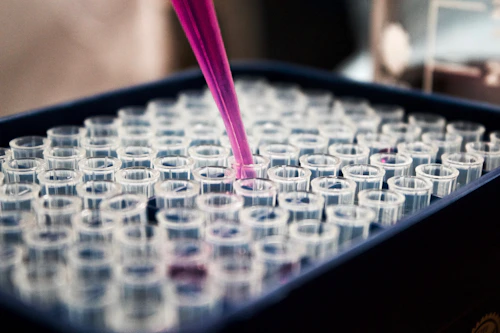
Peptide solubility is a critical parameter for successful bioassays and handling. It depends on net charge, hydrophobicity, length, and secondary structure. General principles: acidic peptides (high negative charge) dissolve best in slightly basic buffers; basic peptides require slightly acidic conditions. Hydrophobic sequences containing many aliphatic or aromatic residues tend to aggregate. Recommended strategies: first try ultrapure water, then add ammonium bicarbonate, dilute acetic acid, or mild organic solvents (acetonitrile, DMSO). For extremely hydrophobic peptides, use up to 30% acetonitrile or DMSO with sonication. Always prepare fresh solutions and avoid freeze-thaw cycles to maintain solubility.
- Charged residues: Lys, Arg, Asp, Glu enhance solubility in aqueous buffers.
- Aggregation risk: Highly hydrophobic peptides may need solubilization aids like cyclodextrins.
- pH adjustment: Solubility is typically highest 2–3 pH units away from the isoelectric point (pI).
Standard Procedure For Storing Peptides
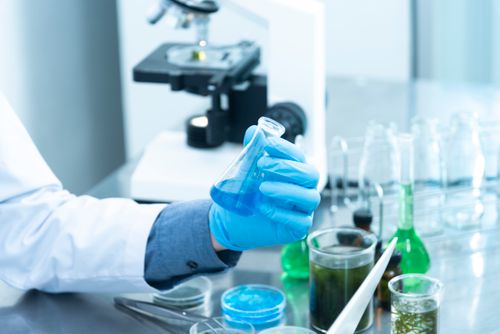
Proper storage preserves peptide integrity, preventing degradation, oxidation, and aggregation. Lyophilized (freeze-dried) peptides should be stored at -20°C or -80°C in airtight desiccated containers to avoid moisture uptake. Allow the vial to reach room temperature before opening to prevent condensation. Once reconstituted, peptide solutions are less stable: store in aliquots at -20°C, avoid repeated freeze-thaw cycles. For short-term storage (days), keep at 4°C under sterile conditions. Adding stabilizers like trehalose or BSA can enhance shelf life. Always protect light-sensitive peptides (those containing Trp, Tyr, Cys) using amber vials or foil wrap. Label each vial with date, concentration, and buffer composition.
- Long-term: Lyophilized powder at -80°C → stable for years.
- Avoid: Exposure to humidity, proteases, and bacterial contamination.
- Pro tip: Store peptides in small working aliquots to limit freeze-thaw damage.

Peptide Purification
After solid-phase synthesis, crude peptides contain truncated sequences and side products. HPLC (High-Performance Liquid Chromatography) is the gold standard for purification, especially reversed-phase (RP-HPLC) using C18 columns and gradients of water/acetonitrile with 0.1% TFA. Ion-exchange chromatography or size-exclusion may also be used. Purification aims to achieve ≥98-99% purity, verified by analytical HPLC and mass spectrometry. Large-scale purification may involve preparative HPLC. By-products, deletion sequences, and incompletely deprotected species are removed during this process. At Biotech Peptides and Gears, each batch undergoes dual verification (HPLC + MS) and a Certificate of Analysis (COA) is provided to guarantee high purity for reproducible research.
- RP-HPLC: Most effective for most peptides; separates by hydrophobicity.
- Mass spec: Confirms molecular weight and detects impurities.
- Lyophilization: After purification, peptides are freeze-dried into powder.
Peptide Synthesis
Modern peptide synthesis is predominantly performed via Solid-Phase Peptide Synthesis (SPPS), pioneered by Robert Bruce Merrifield. In SPPS, the C-terminal amino acid is attached to an insoluble resin. Chain assembly proceeds through repeating cycles: deprotection (removing Fmoc or Boc), activation, and coupling of the next protected amino acid. After the full sequence is built, the peptide is cleaved from the resin and side-chain protecting groups are removed. Liquid-phase synthesis is also used for short sequences. Advanced methods include microwave-assisted SPPS for speed and high yield. Our facility uses automated synthesizers to produce even challenging, long, or cyclic peptides with high precision, followed by lyophilization to ensure stability.
- Fmoc strategy: Mild base-labile protection; most common in research.
- Coupling reagents: HBTU, HATU, DIC/Oxyma for high efficiency.
- Crude cleavage: TFA-based cocktails release the peptide from resin.
